For 29 years our focus has always been on enriching the way people live, work and play through well-constructed, purposeful architecture and interior design.
Avenues
Coastal architecture
March 2026
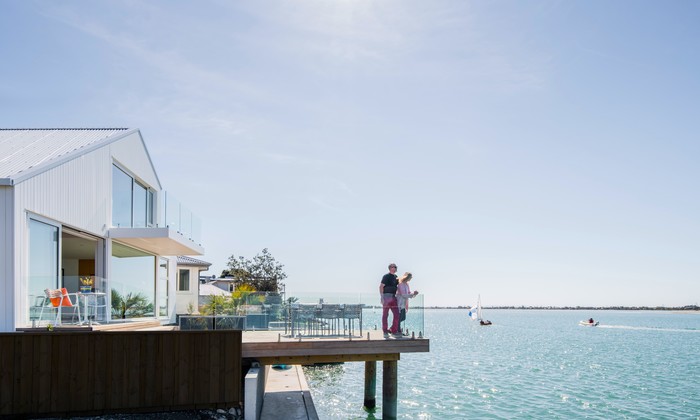
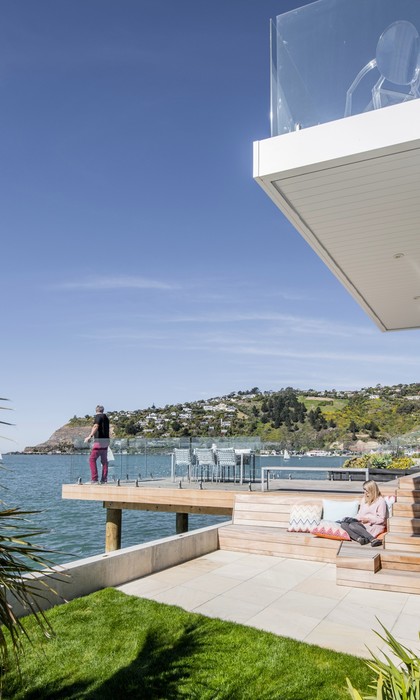
I have spent most of my life living in what many affectionately call the "swamp": Papanui, Strowan, and Merivale. Five years ago, however, we moved to the "Redcliffs Riviera" building a home at the edge of the Avon Heathcote Estuary / Ihutai ... so close to the water in fact that our deck projects over it, immersing the house in its coastal setting. The scent of salt air, the rhythm of the tides, the distant sound of waves breaking, abundant birdlife, and an ever-changing sky that stretches to the horizon. That sense of openness brings with it a feeling of possibility - of living quite literally at the meeting point of land and sea.
Designing and building in a coastal environment requires a distinctly different architectural response than designing for other locations such as the hills, the plains or CBD. Exposure to airborne salts necessitates careful material selection, robust detailing, and high-quality finishes to ensure longevity. Maintenance regimes also need to be proactively considered, not as a burden, but as part of responsible stewardship of a building in a demanding and rewarding environment.
Christchurch's easterly winds can be mitigated by sheltered courtyards or embraced on hot days as a welcome sea breeze.
Sandy or variable soils prevalent on the coast call for well-engineered foundations and a clear understanding of ground conditions.
These are not constraints so much as design parameters - factors that, when addressed intelligently, lead to more resilient and better - performing buildings.
Longer-term considerations such as potential sea-level rise are also part of contemporary coastal design thinking. In our case, this informed decisions around finished floor levels and the construction of a seawall. Despite some alarmist media, many coastal suburbs, including Sumner and Redcliffs, are not facing risk in the short or medium term, and any sea-level change will be gradual, allowing time for adaptation through planning, design innovation, and staged responses.
Ultimately, living on the coast is fundamentally different from living inland, and architecture must respond accordingly. That response encompasses pragmatic construction methods, materials appropriate to place, and an aesthetic suited to openness and informality. When done well, coastal architecture does not resist its environment but works with it - embracing exposure, celebrating its natural setting, and supporting a way of life shaped by the convergence of land, sea, and sky.